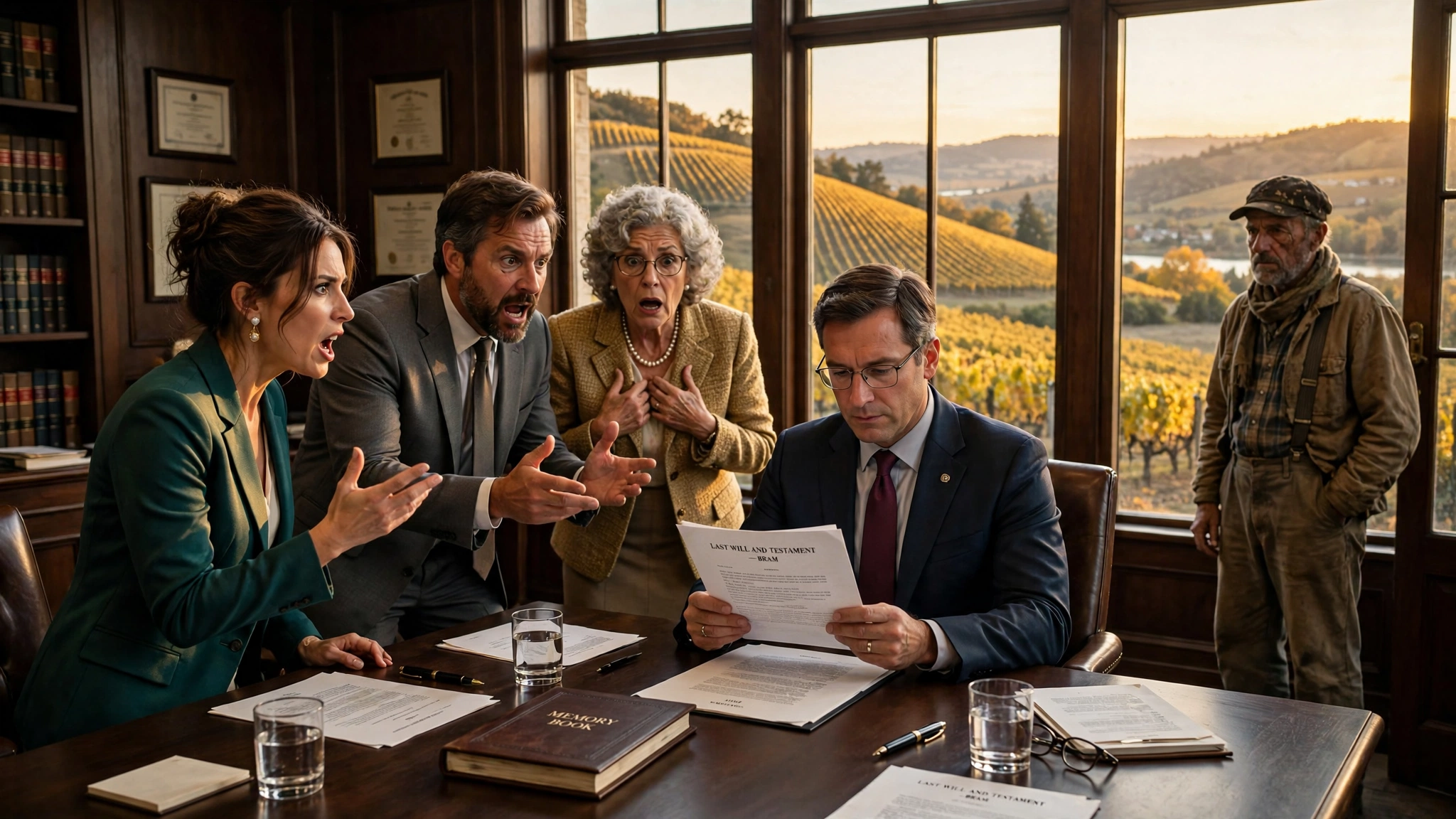
His whole family fought over the inheritance until the lawyer read the last line of the will
Uncle Bram had forty acres of vines on the hill above the river, and for the last three winters he had been dying slowly, which gave the family plenty of time to discuss the vines.
Discuss is the polite word. In the hospital café, over cold coffee, they divided the land: the cousins wanted to sell to the developer with the printed brochures. The sisters wanted to keep the name and hire a manager. Nobody asked what Bram wanted, because Bram, in the last months, mostly slept.
Everyone visited. That is also the polite word. They visited with cameras — photos for the memory book, they said, and for the lawyer, to show how devoted the family had been.
Only two people came without cameras. One was the night nurse, who was paid to be there. The other was Tomas, the hired hand, who had worked the vines for thirty years and came because the vines did not prune themselves.
When Bram died in April, the will was read in the lawyer’s office with the good chairs.
The first page gave the small things: the watch to the eldest, the books to the youngest, a letter to each of them that the lawyer would not read aloud.
The second page held the land. Forty acres, the house, the cellar, the name — all of it, whole, undivided, to Tomas Ilyich, currently residing in the worker’s cottage.
The room stood up at once. There was shouting of a legal nature. The lawyer waited it out the way lawyers do, and then he read the last line.
“To my family,” the will said, “I leave the memory book. May they enjoy, at last, being in the same room together.”
The developer walked away in June. The wine under Tomas’s first solo harvest won a medal in October, and the label carries two names: Bram’s, and the family’s — because Tomas, who was never in a single photograph, put them there himself.